
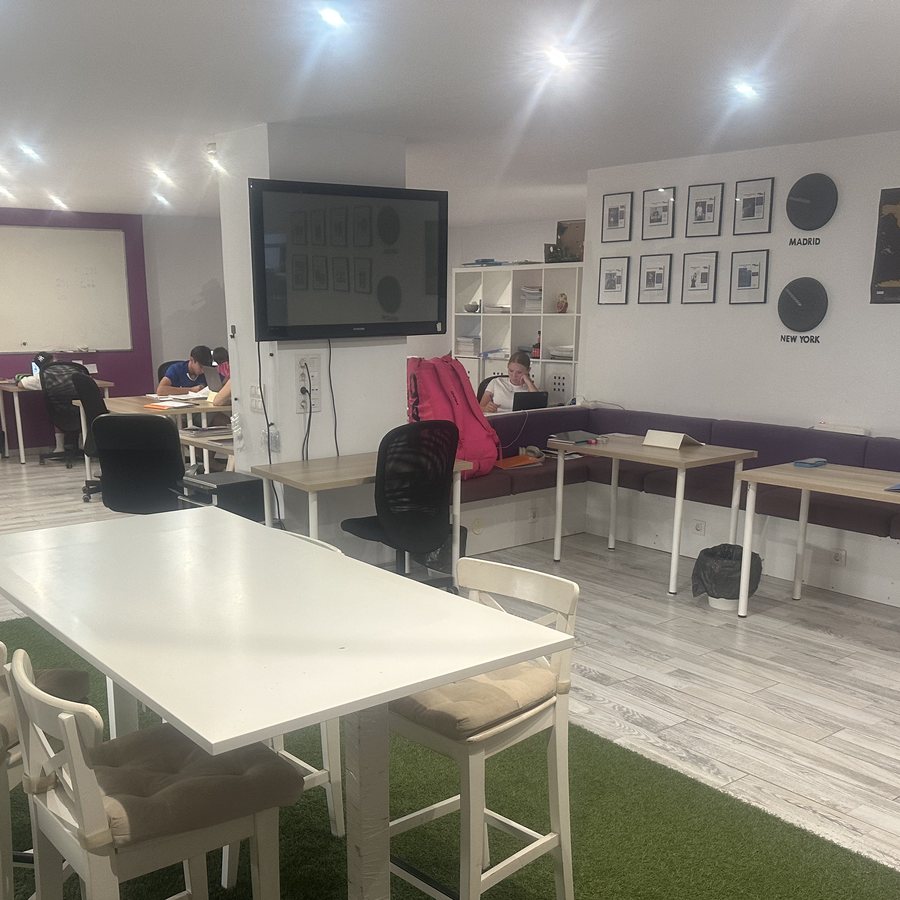
A British curriculum, taught on site and timetabled around the training day. Lessons in the heat, tennis in the cool.
At twelve or thirteen the hours a child needs on court stop fitting inside a normal school week. Most families solve it by sacrificing one side or the other. The strong student trains less. The strong player falls behind and quietly closes the university door.
Synergy exists because the academy director went to thirteen schools between the ages of four and fourteen chasing tennis, and left formal education altogether to play. He built the school he did not have.
Your child does not log in alone from a bedroom. Teachers are in the room, and the room is on the same site as the courts.
Taught in person, at ChayofaThese are full Edexcel iGCSEs and A Levels, the same qualifications sat anywhere else, with the same exam board.
Edexcel, start to finishSynergy is a separate business with its own Director of Studies, billed separately, run to its own standards rather than squeezed around a training plan.
Its own school, on our site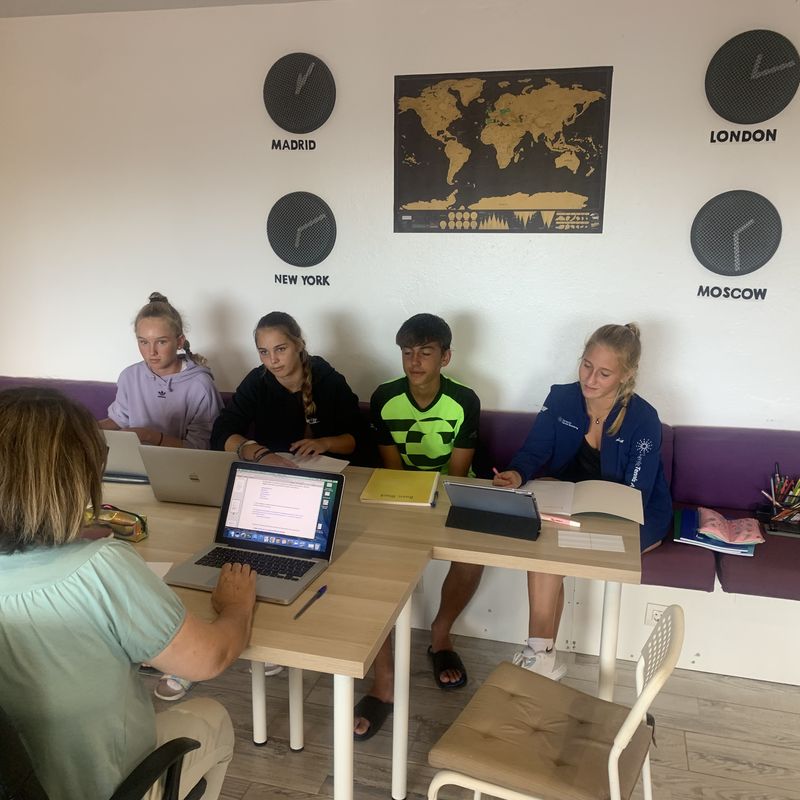
That is deliberate, and it is why nobody slips through it. The clocks are on the wall because the students are not all from the same place.
In a room of no more than eight, so a child who arrives behind catches up in weeks rather than years.
Taught in the subjects a United States scholarship needs, over one year or two depending on the tennis calendar.
The Spanish government approved distance programme written for young athletes, supported in person here, with English taught alongside it.
The timetable is built the right way round. The best court hours are the morning and the late afternoon, so the classroom takes the middle of the day when nobody wants to be in the sun anyway.
No homework The study is done in the study block. Evenings belong to recovery, and to being fourteen.
Across every student Synergy has taken through to exams on this site. We spot a student falling behind and put the support in before it becomes a grade.
The NCAA does not accept a transcript assembled at the last minute. Eligibility is judged on the whole run from Year 9 to Year 13, which is why the academic plan starts the day a player arrives, not in their final year.
The five iGCSE subjects the NCAA counts, taken on a timeline that works round the tournament calendar.
Started early, on purposeAmerican universities need two. Taking two rather than three gives back roughly eight hours a week to tennis and to chasing UTR points.
Two done well beats three done badlyPrepared for on site, so the tests are not a scramble in the last year.
Built into the timetableCoaches recruit on UTR and admit on grades. A player needs both, and here they are on the same site.
Students have also gone to British universities, Loughborough among them, to carry on playing while they study. The qualification is a normal British one, so it travels.
A class is never larger than eight. A student who misses a fortnight for a tournament is caught up individually rather than left to work it out.
Never more than eightEverything is delivered through Google Classroom, so the coursework goes to the tournament in the same bag as the rackets and the work continues from a hotel room.
Nothing is left behindA player here for a camp week or a training block can work in the study centre with a desk and fast internet, bringing their own school material. Teacher support can be arranged.
See training blocks →Sets the academic plan for every pupil and oversees the teaching.
Every academic plan starts hereTeaches the primary group, and is the one contact a family deals with for everything else, day or night.
Also our child protection delegateThe tennis staff, the physiotherapist and the strength coaches work alongside the school rather than around it, because the timetable is one timetable.
Who we are →Synergy is its own business, so the school fee is its own line rather than something folded into a tennis price. All figures carry 7% IGIC.
Books, materials and exam entries are quoted in advance. All figures are before IGIC.
Every academic plan starts with a conversation about where your child actually is, rather than where their year group says they should be. We will tell you plainly whether this route works for them.